
Intermarket analysis connects equities, bonds, interest rates, the US dollar, commodities, credit, and liquidity to form a cross-asset market view. Comparing them together helps distinguish whether markets are reinforcing the same environment, diverging, or giving mixed signals.
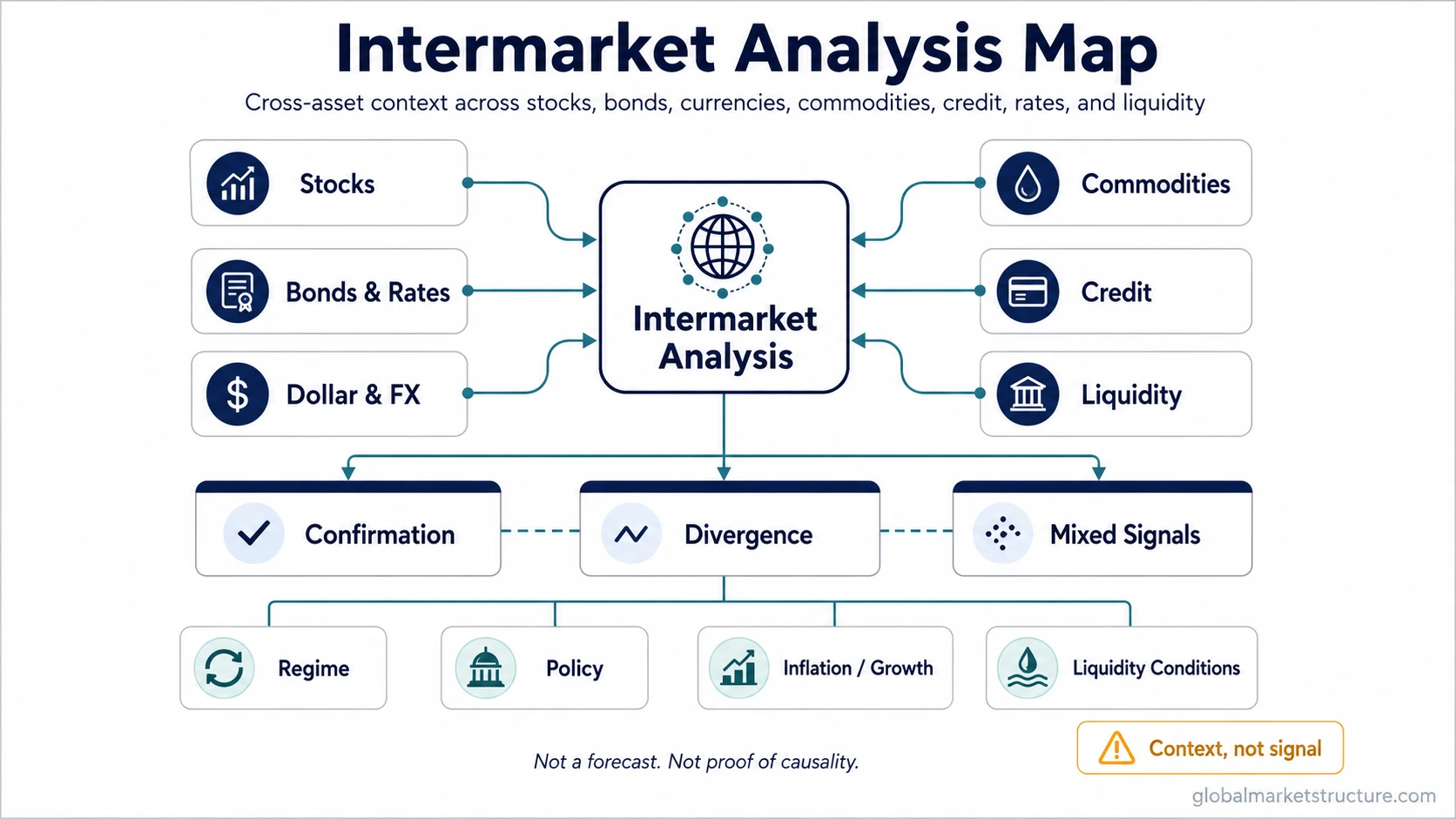
What Intermarket Analysis Connects
Different asset classes respond to different parts of the macro environment. Equities often carry information about growth and risk appetite, while bonds and yields are more closely tied to policy and inflation expectations. Dollar behavior adds funding and liquidity context. Commodities can reflect growth, inflation, or supply conditions, and credit spreads add information about risk pricing.
The same equity move can carry a different interpretation depending on whether bonds, credit, currencies, commodities, and liquidity broadly confirm it or conflict with it.
Main Analysis Routes
| Route | Use When | Main Interpretation Role |
|---|---|---|
| Intermarket Foundations | Studying definitions, correlation, and correlation breakdowns. | Introduces why relationships change by regime. |
| Equities and Bonds | Stocks, bonds, yields, duration, equity risk premium. | Shows interaction of rate and bond conditions with equity behavior. |
| Dollar, Commodities, and FX | Dollar cycles, DXY, commodity currencies, FX pass-through. | Explains currency pressure, commodity links, and liquidity context. |
| Commodities, Inflation and Growth | Oil shocks, commodity cycles, copper/gold ratio, real assets. | Determines whether commodities reflect growth, inflation, or supply stress. |
| Global Divergences | Interest-rate and policy divergence, currency context, regional differences. | Explains why economies and markets do not move together. |
Alignment across markets can support an interpretation, but it does not establish causation or create a mechanical forecast. Relationships can change with the macro regime, liquidity, credit conditions, and policy, so confirmation and divergence should remain part of the context rather than a standalone signal.